Few regions of the Atlantic are as closely linked to shipwrecks as the waters around Bermuda. Weather extremes, reefs, currents and navigational errors turned this sea area, for centuries, into a natural testing ground for seafaring.
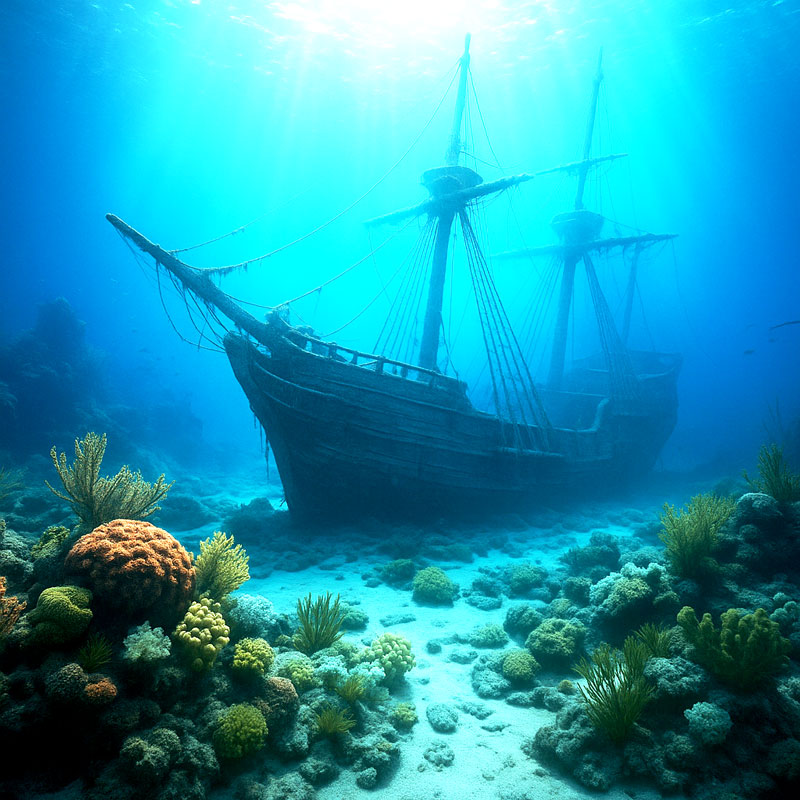
Visualisation of historical wrecks in the waters off Bermuda – one of the densest wreck regions in the Atlantic.
Documented ship losses range from the early 17th century to the era of large passenger vessels and world wars. Some wrecks are now key reference cases for maritime archaeology, oceanography and the history of navigation.
For shipping, passing Bermuda has always meant increased risk: current drift, unpredictable weather changes and a dense belt of coral reefs made the area a highly complex navigation zone – long before precise position-finding was possible.
Shipwrecks around Bermuda The documented losses illustrate the full range of maritime risks – from storms and reefs to navigational errors and circumstances that remain unexplained to this day.
The following examples show how different the causes could be – and why Bermuda still serves as a kind of laboratory for maritime risks and safety concepts.
Mini riddle: What sank these ships?
Match the three case descriptions with the most likely primary cause. Each cause is used exactly once.
Case A
After several days of heavy weather, a merchant ship is driven off course. Visibility is poor, the crew is exhausted – shortly afterwards the main mast breaks, and the ship drifts helplessly on the open sea.
Case B
A ship follows the coastline too closely to save time. On a moonless night, in apparently calm seas, it suddenly runs aground – just a few nautical miles from a well-known reef belt.
Case C
The chronometer is slightly off, and the course correction comes too late. The officers believe they are far out at sea – in reality, a belt of reefs lies just a few cables ahead.
Hint: Each cause (storm, reef, navigation error) is used exactly once.
One of the largest and most luxurious cruise ships of its time. The Cristobal Colon ran aground on a reef off Bermuda’s north coast after the captain mistakenly took an offshore communication tower for the Gibbs Hill Lighthouse.
The Warwick, owned by the Earl of Warwick and chartered to the Virginia Company, sank in Castle Harbor during a severe storm. Contemporary sources report exceptionally violent winds that night.
Key event
Sea Venture
English flagship · 1609
The Sea Venture is considered one of the most significant shipwrecks of early colonial history. In 1609, the London Company’s convoy bound for Jamestown was caught in a massive hurricane.
Badly damaged and leaking, the flagship was deliberately run onto Bermuda’s reefs by Captain Sir George Somers in order to save crew and passengers – around 150 people survived. Their unplanned stay led to the first permanent settlement on Bermuda.
The English brig Caesar, built in 1814, was wrecked in 1818 on her voyage from Shields to Baltimore after striking a reef in the waters influenced by Bermuda. The case highlights the limits of contemporary navigation methods in complex reef zones.
The French frigate L’Herminie belonged to a squadron operating in Mexican waters. On her return from Havana she sought shelter, after heavy weather, in the sea area off Bermuda. An unfavourable combination of wind, current and limited manoeuvrability led to the loss of the ship.
Arms transport & hospital ship · 18th/19th century
The Lord Amherst, an English arms transport, was at times used as a hospital ship to bring wounded soldiers from the Revolutionary War back to England. On her voyage from Jamaica to London the ship sank; contemporary reports mention structural damage and severe weather conditions as possible causes.
The San Antonio was en route to Cádiz, carrying more than 5,000 pounds of gold and silver, when she was wrecked on the western reefs of Bermuda. Accounts from the survivors provide insight into early practices of wreck diving and the search for valuable cargo.
The Pollockshields, loaded with supplies for the First World War, encountered a severe hurricane in the Atlantic. After the storm eased, currents carried the ship towards Bermuda’s reef zones, where she eventually ran aground. The case is frequently cited in meteorological studies of historical storms.
The Mary Celeste was found abandoned in 1872 between the Azores and Portugal. The ship was seaworthy, the cargo intact. To this day it remains unclear why the crew left the vessel – the case is one of the most famous unresolved mysteries in maritime history.
300-year-old sherry discovered in the wreck of the Warwick
A discovery that astonishes historians and connoisseurs alike: in the wreck of the English warship Warwick, divers found several exceptionally well-preserved bottles of a long-forgotten cream sherry from Jerez.
One of the sherry bottles recovered from the wreck of the Warwick.
A treasure in the cold Atlantic
The bottles lay untouched on the seabed for around 300 years. The constant temperature of about seven degrees and the airtight seal created almost ideal conditions under which the sherry could mature extraordinarily well.
Wreck diver Teddy Tucker confirmed that it is, in all likelihood, perhaps the oldest unopened sherry in the world. During his investigations in the murky water between the decayed timbers of the Warwick, he came across several intact glass bottles – a find that has surprised even experienced specialists.
“A sensational find. In terms of flavour it is reminiscent of a cream sherry. But the original production method has been lost over the centuries.”
A lost tradition
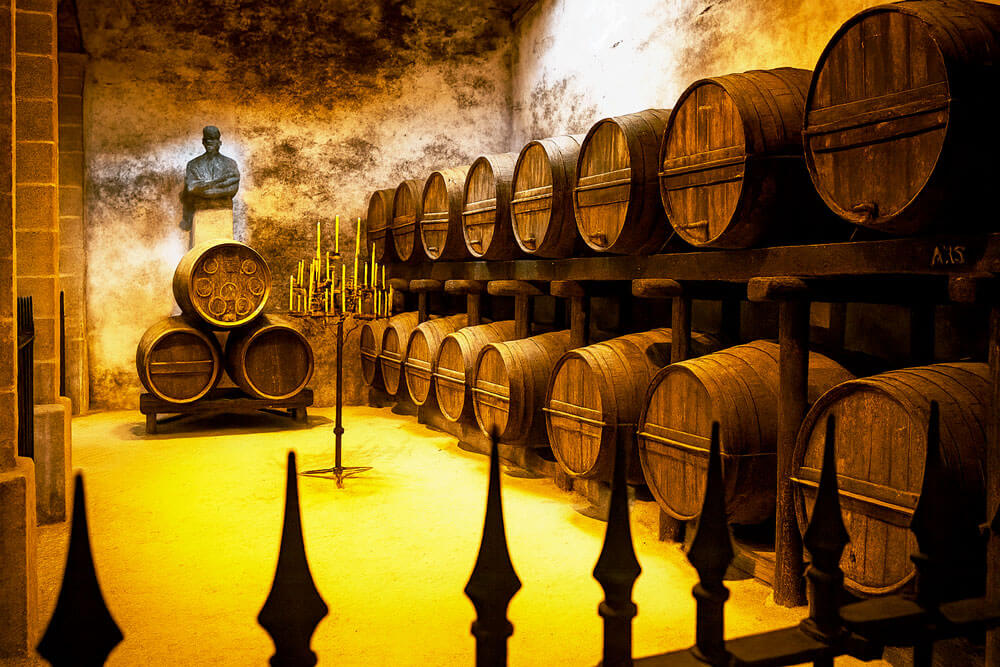
The recovered sherry was presented to a selected audience – displayed in a water-filled glass cylinder so that the antique cork would stay moist and not disintegrate. Connoisseurs who were allowed to taste this one-of-a-kind sample reported unanimously: the flavour exceeded all expectations.
For the traditional yet economically struggling Bodegas Tio Mateo in Jerez, this discovery could be a ray of hope. An expert team has been sent to Andalusia to reconstruct the lost production method of this extraordinary cream sherry.
The story of the Warwick and the discovery of its sherry is a reminder that the wrecks around Bermuda still harbour secrets – some of which may yet be waiting, like this sherry, to one day be brought back to light.
Warwick sherry sequence
Remember the order in which the barrels light up — then tap them in the same order.
🍷Cream barrel
🛢️Storage barrel
🌊Ocean barrel
⭐Reserve barrel
Excellent!
You’ve mastered the full Warwick sherry sequence and qualified yourself for another mission.
In Singapore, secret alliances, ancient rituals and a hidden power await you. Dive into the shadow world of the “Secret Society” and face your next challenge.