
Select your language


The Final Chapter of the Sea Venture
You have located the wreck, followed the traces and tested the myths – now the story speaks for itself.
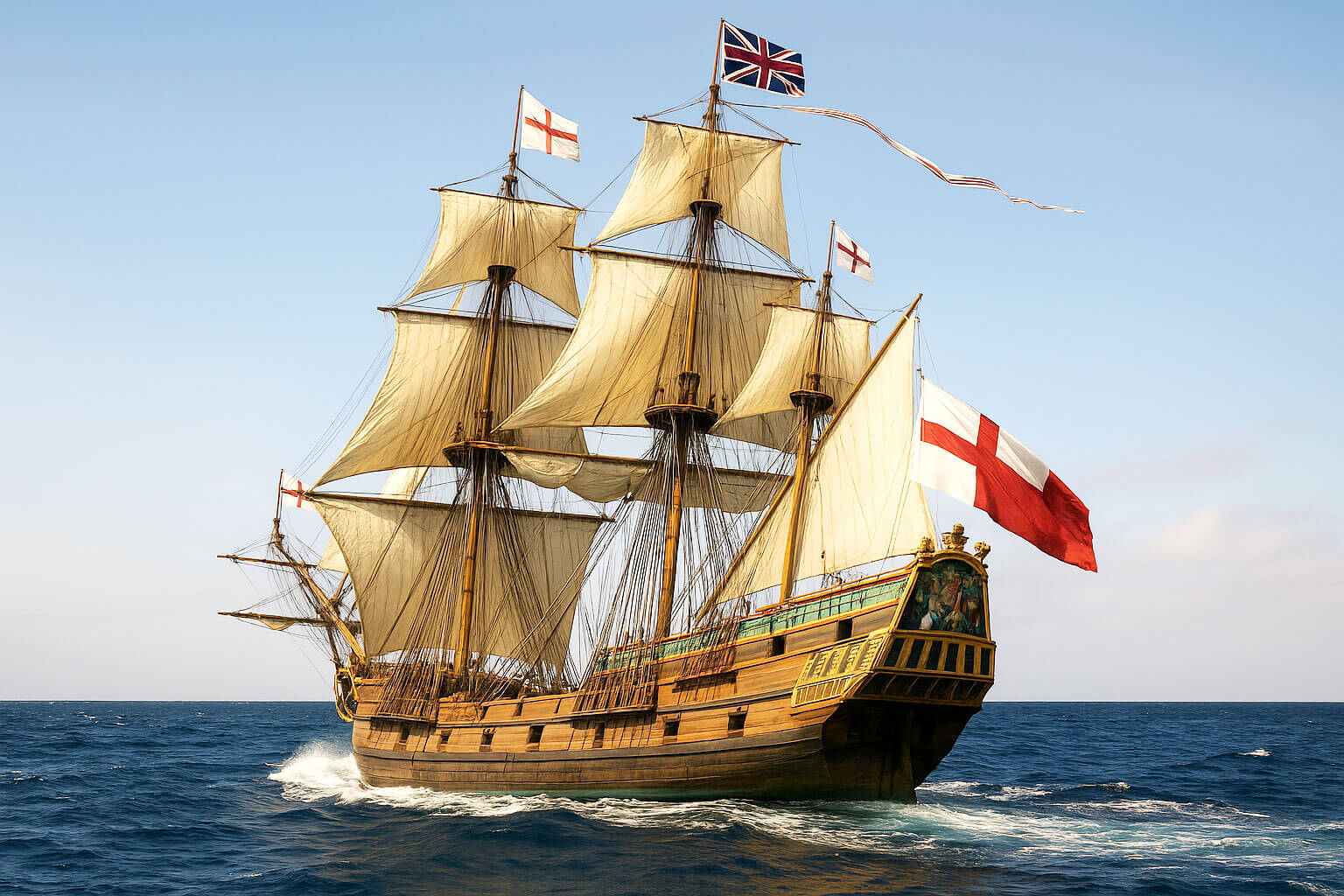
In 1609, the Sea Venture, flagship of the London Company, is caught in a massive hurricane. The hull is leaking, the ship close to sinking – until the crew recognises one last chance: the reefs off Bermuda.
Under Sir George Somers, the ship is deliberately driven onto the reef. The hull breaks apart, but all roughly 150 people survive. From the remains of the Sea Venture and the timber of the island, Deliverance and Patience are later built – the ships that save Jamestown and turn Bermuda into a new home.
Some of the survivors stay. One of them: Christopher Carter – fisherman, settler and later a key figure in the legends of Bermuda’s hidden treasures.
Wreckage, cannons & Carter
The Sea Venture, stranded on the reef, is stripped: sails, timber, metal, weapons – everything that can be used is salvaged and built into the new colony. Parts of the material, including cannons, are used from 1612 onwards to secure the young settlement.
Centuries later, divers and researchers examine the remains off Bermuda, and indeed it was discovered at the position that Carter marked as “Ship 3” on his sea chart: scattered wreckage, metal fragments, ceramics and equipment remains – traces of a ship that made history. Christopher Carter, one of the first permanent residents of Bermuda, remains at the centre of these stories as a figure between documented biography and enduring legend.
Treasure hunters, myths & Tucker
The famous treasure hunter Teddy Tucker is often associated with gold and precious metals. His actual treasure find – gold and valuable pieces – comes, by his own account, from the wreck of the Spanish galleon San Pedro, not from the Sea Venture.
For the Sea Venture, the situation to this day is:
- Wreckage and relics are documented and partly preserved in museums.
- The ship’s role for Jamestown and Bermuda is historically secured.
- A gold treasure – gold ducats or precious metals – has never been reliably documented.
The gold ducats spoken of in the legends never demonstrably left the Sea Venture in the established sources. They remain part of the myth, not of the find history.